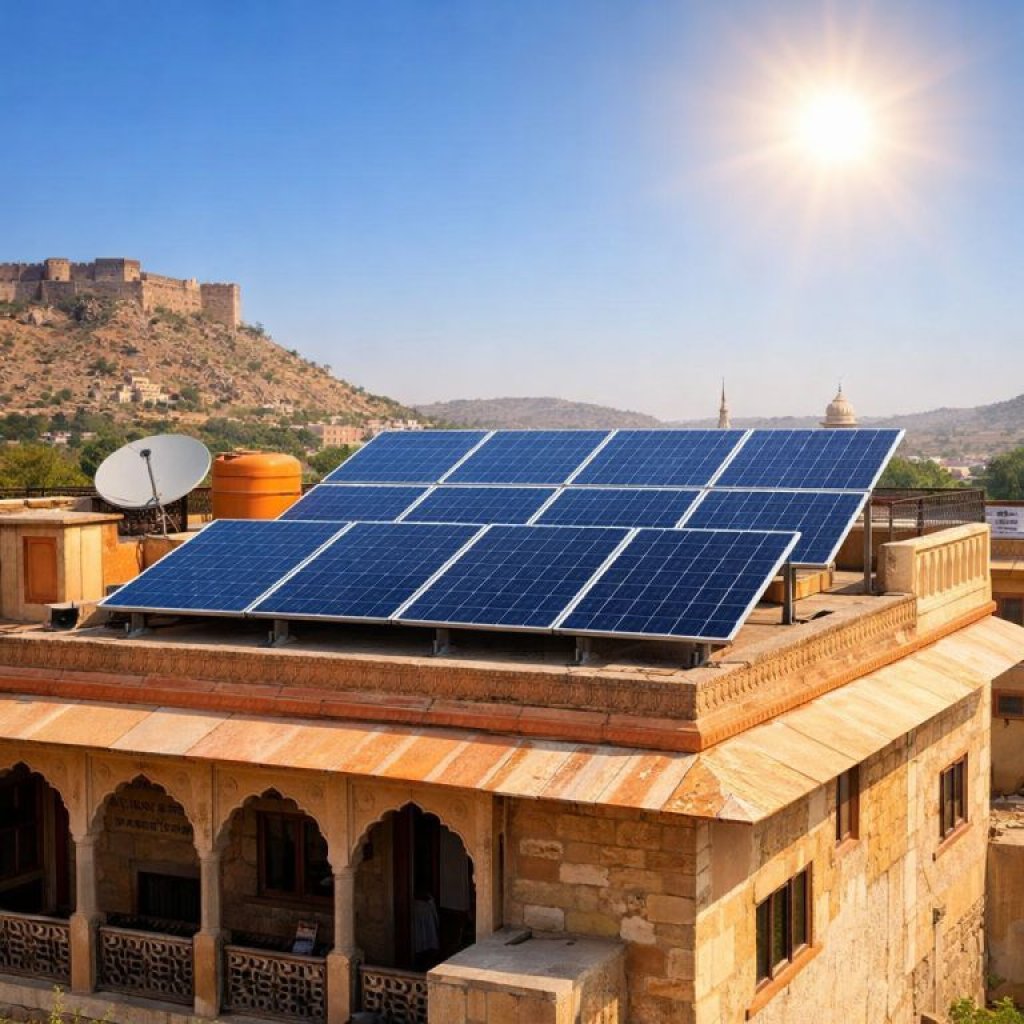
Rooftop Solar Subsidy India: Save Power Bills & EMI
Rooftop Solar Subsidy in India: Benefits, Eligibility & EMI Impact
Rising electricity bills are a common problem for Indian households. Monthly power costs affect savings, loan EMIs, and overall financial planning. Rooftop solar subsidy schemes aim to solve this by reducing installation cost and long-term electricity expenses.
With proper planning, solar installation is not just an energy decision, but a smart financial move. When combined with EMI planning tools from AutoEMI, households can manage expenses without disturbing car loan, tractor loan, or used vehicle EMI commitments.
What is Rooftop Solar Subsidy for Residential Households?
The Government of India provides financial support for installing rooftop solar plants on residential houses. The subsidy amount depends on the installed capacity in kilowatt (kW).
Subsidy Structure for Individual Homes
- ₹30,000 per kW for systems up to 2 kW
- ₹18,000 per kW for additional capacity up to 3 kW
- Maximum subsidy capped at ₹78,000 for systems above 3 kW
This subsidy directly reduces the upfront cost, making solar more affordable for middle-class Indian families.
Subsidy for GHS / RWA (Group Housing Society)
Group Housing Societies (GHS) and Resident Welfare Associations (RWA) also get subsidy benefits.
- ₹18,000 per kW for common facilities
- Includes EV charging infrastructure
- Capacity up to 500 kW (@3 kW per house)
The upper limit includes individual rooftop plants installed by residents within the society.
Additional Benefit for Special States
Special category states get an additional 10% subsidy per kW, making solar even more cost-effective.
How to Choose the Right Solar Plant Capacity?
Choosing the right capacity is important for cost control and EMI planning.
| Monthly Units | Recommended Capacity |
|---|---|
| 0–150 units | 1–2 kW |
| 150–300 units | 2–3 kW |
| Above 300 units | Above 3 kW |
Oversizing increases cost, while undersizing reduces savings. Balanced planning protects monthly cash flow.
Why Rooftop Solar Matters Financially for Indian Families
Solar energy directly impacts household finances in multiple ways:
- Lower monthly electricity bills
- More disposable income for EMIs
- Improved loan eligibility due to reduced expenses
- Long-term savings for vehicle upgrade or asset purchase
For families paying car loan or tractor EMI, reduced power bills help maintain EMI discipline without stress.
Solar Installation Cost vs EMI Planning
Many households worry about upfront installation cost. This is where EMI planning becomes important.
Before committing funds, users can:
- Check loan affordability using Loan Eligibility Checker
- Compare loan options with Interest & Tenure Comparison
- Estimate monthly impact using Vehicle Loan Calculator
This ensures solar investment does not disturb existing EMIs.
Step-by-Step Guide to Apply for Rooftop Solar Subsidy
Step 1: Assess Electricity Consumption
Check your last 6 months electricity bills to estimate average usage.
Step 2: Choose Plant Capacity
Select capacity based on consumption and roof space.
Step 3: Budget & EMI Planning
Plan funds while considering current vehicle loan or equipment EMI.
Step 4: Document Readiness
Use Loan Document Checklist to stay prepared.
Step 5: Installation & Subsidy Claim
Install via approved vendor and apply for subsidy as per guidelines.
Real-Life Indian Use Cases
Urban Homeowner
A Jaipur family with ₹3,000 monthly electricity bill installs a 3 kW system. Subsidy reduces cost by ₹78,000. Monthly savings help them prepay bike loan EMI.
RWA with EV Charging
A housing society installs solar for lifts and EV charging. Lower maintenance charges improve residents’ affordability for car loans.
Rural Household
A farmer household reduces power cost and redirects savings toward tractor EMI using Tractor EMI Calculator.
How AutoEMI Helps in Solar Financial Planning
AutoEMI is not just for vehicle loans. It supports smart financial decisions.
- EMI calculation for vehicles and equipment
- Used asset valuation via Used Vehicle Value Estimator
- Digital verification & services from Uttarottar Services
This helps households plan solar investment without disturbing long-term financial goals.
FAQs – Rooftop Solar Subsidy India
1. Is rooftop solar subsidy available for all houses?
Yes, residential households meeting guidelines are eligible.
2. Can I take a loan for solar installation?
Yes, many users finance solar while managing vehicle EMIs carefully.
3. Does solar installation affect loan eligibility?
Reduced monthly expenses can improve eligibility.
4. Is subsidy available for apartments?
Yes, through GHS/RWA common facility installations.
5. Should I prepay EMIs or install solar?
Both can be balanced with smart EMI planning using AutoEMI tools.
Conclusion: Solar Power with Smart Financial Planning
Rooftop solar subsidy is not just an energy benefit. It is a financial opportunity. Lower electricity bills improve EMI affordability, loan eligibility, and savings.
Before investing, use AutoEMI calculators to plan responsibly. Smart energy decisions today can lead to stress-free EMIs tomorrow.
No comments yet
Be the first to share your thoughts!
Leave a Comment